OCD treatment · Online · Across New Zealand
Perinatal OCD: intrusive thoughts in pregnancy and after birth
Unwanted thoughts about your baby being hurt are common in new parents, and when they take over they can be a form of OCD. It is treatable, including while you're pregnant, breastfeeding or running on no sleep.
Book a session Ask a questionAdults 18+ in New Zealand · Private-pay, not an ACC service · Online only · Not a crisis service
- Pick a time on our secure booking page (Carepatron), and a psychologist if you have a preference.
- Pay by card when you book: $228.85, plus a small card processing fee.
- Get your video link and a short intake form by email. How it works →
By booking, you agree to our Terms of Service, Privacy Policy and Cancellation Policy.
What is perinatal OCD?
Perinatal OCD is obsessive-compulsive disorder that begins or worsens during pregnancy or the first year after birth. Obsessions are usually unwanted thoughts or images of the baby being harmed, contaminated or lost; compulsions include checking, avoiding, seeking reassurance and mental reviewing. It is distinct from postnatal depression and from postpartum psychosis, and it responds to ERP.
The thoughts new parents don't talk about
A new mother in Christchurch stands at the head of the stairs holding her six-week-old and an image flashes through her mind of dropping him. A father bathing his daughter suddenly pictures her slipping under the water. Someone chopping vegetables with the baby asleep in the next room has a thought about the knife that makes her feel sick.
These thoughts are far more common than most people realise. In a study of new mothers, intrusive thoughts of accidentally harming the baby were universal, and close to half reported unwanted thoughts of intentionally harming their infant. The thoughts are not wishes. They are the mind's threat system misfiring around the most precious thing in your life.
Perinatal OCD develops when those thoughts become stuck and start to drive behaviour. Common obsessions include harm (dropping, drowning, suffocating, sexual thoughts while changing a nappy), contamination (germs on bottles, chemicals, illness passed to the baby) and loss (cot death, kidnapping). The compulsions that follow can include checking breathing every few minutes through the night, sterilising bottles repeatedly, refusing to bathe the baby alone, hiding knives, avoiding stairs, asking your partner again and again whether you're a good parent, and endlessly reviewing your own thoughts for evidence about what they mean.
Fathers and partners develop perinatal OCD too, and people who already had OCD often find it worsens around the birth.
How common is perinatal OCD?
Older estimates put perinatal OCD at about 1 to 2 percent of pregnant or postpartum women. More recent Canadian research that asked specifically about perinatal symptoms found much higher rates: a weighted prevalence of 7.8 percent during pregnancy and 16.9 percent in the postpartum period, with about 9 percent of participants developing OCD for the first time by six months after birth.
The exact figure depends on how the question is asked, but the message is consistent. Perinatal OCD is not rare, it is under-recognised, and health professionals don't always ask about it.
Not postnatal depression, not psychosis: the differences that matter
Perinatal OCD is often mistaken for other conditions, and getting this right matters because the treatments differ.
- Postnatal depression centres on low mood, loss of interest and pleasure, hopelessness and exhaustion beyond ordinary tiredness. It can co-occur with OCD, and living with relentless intrusive thoughts can lead to depression. OCD's defining feature is the intrusive thought and the ritual that follows, which depression on its own does not have.
- Postpartum psychosis is a rare psychiatric emergency. A global systematic review found incidence estimates of roughly one to three in every thousand births. It usually begins suddenly in the days or first weeks after birth and involves confusion, severe mood swings, hallucinations or beliefs that are held as true. A woman with psychosis may not experience distressing thoughts as alien or wrong.
- Perinatal OCD is the opposite in an important way. The thoughts are experienced as horrifying, unwanted and completely against your values, which is exactly why they cause so much suffering. People with OCD recognise the thoughts don't fit who they are. OCD specialists note that perinatal OCD is not associated with acting on the thoughts.
If you are frightened by your thoughts, that fear is itself evidence that they don't match what you want. Clinicians writing in the British Journal of General Practice have warned that misdiagnosing perinatal OCD as psychosis causes real harm, including unnecessary admissions that worsened the OCD. Equally, psychosis needs urgent care; see the section below on when to seek help immediately.
Book a session How booking works →
Treatment that fits around a baby
Exposure and response prevention (ERP), the form of CBT recommended for OCD by clinical guidelines, is used for perinatal OCD and adapted to your situation. NICE guidance on antenatal and postnatal mental health notes that anxiety disorders including OCD are under-recognised in this period and recommends prompt access to psychological treatment.
In practice, treatment involves understanding why your mind is producing these thoughts, learning that having a thought is not the same as wanting or intending it, and gradually reducing the compulsions that keep the fear alive. Exposures are built together and graded. They might start with bathing the baby while your partner sits nearby, then alone with the door open; preparing food with a knife while the baby is in the room; or letting your baby sleep without checking for a set stretch. Reassurance-seeking and mental reviewing are reduced step by step.
If you'd like, you're welcome to bring a support person to a session, such as your partner, a family or whānau member, or a friend. Partners are often the main source of reassurance, so joining part of a session can help them learn how to support you without feeding the OCD. Sleep deprivation is taken into account: the plan fits your energy, not an idealised version of it.
Medication is a separate decision. Some people use an SSRI alongside therapy; the British Journal of General Practice notes many women prefer not to take medication in the perinatal period. Whether medication is appropriate for you, in pregnancy or while breastfeeding, is a conversation for your GP, midwife, obstetrician or psychiatrist. Our psychologists don't advise on starting, stopping or changing medication, but we do work alongside your prescriber with your consent.
Doing this online with a baby in the house
Online sessions suit this stage of life. You don't need childcare or a drive across town, you can feed during the session, and if your baby wakes we pause. Because exposures happen at home (the bath, the stairs, the kitchen, the cot), practising in your own environment is an advantage rather than a compromise. If a session needs to move, 48 hours' notice lets you reschedule without charge.
Support in Aotearoa New Zealand
- Your GP or midwife can assess you, discuss medication, and refer you to your region's maternal mental health service. These Health NZ services are free and generally see women who are pregnant or have a baby under one year old with moderate to severe difficulties, usually by professional referral rather than self-referral.
- PlunketLine, 0800 933 922, is free, 24 hours a day, and answered by registered Plunket nurses who can talk through parenting stress and mental health concerns and point you to local services.
- Perinatal Anxiety and Depression Aotearoa (PADA) provides information about perinatal OCD and other perinatal mental health conditions, and regional lists of support services.
- 1737: call or text, free, any time, to talk with a trained counsellor.
- Just a Thought's free OCD course teaches CBT and ERP skills online and can be used alongside therapy.
When to get urgent help
Perinatal OCD itself is not an emergency, but some situations need same-day care. Contact your GP, midwife or local mental health crisis team today, or call 111 if there is immediate danger, if you or someone close to you notices:
- sudden confusion, severe agitation or rapidly changing moods in the days or weeks after birth
- hearing or seeing things others don't, or beliefs others around you don't share
- thoughts of harming the baby that feel like a plan or a good idea rather than a frightening intrusion
- thoughts of ending your own life
NICE guidance says sudden-onset symptoms suggesting postpartum psychosis should be assessed within hours. Free support is available any time by calling or texting 1737, or from Lifeline on 0800 543 354 (7am to midnight). Mindwell is not a crisis service.
What to expect at Mindwell
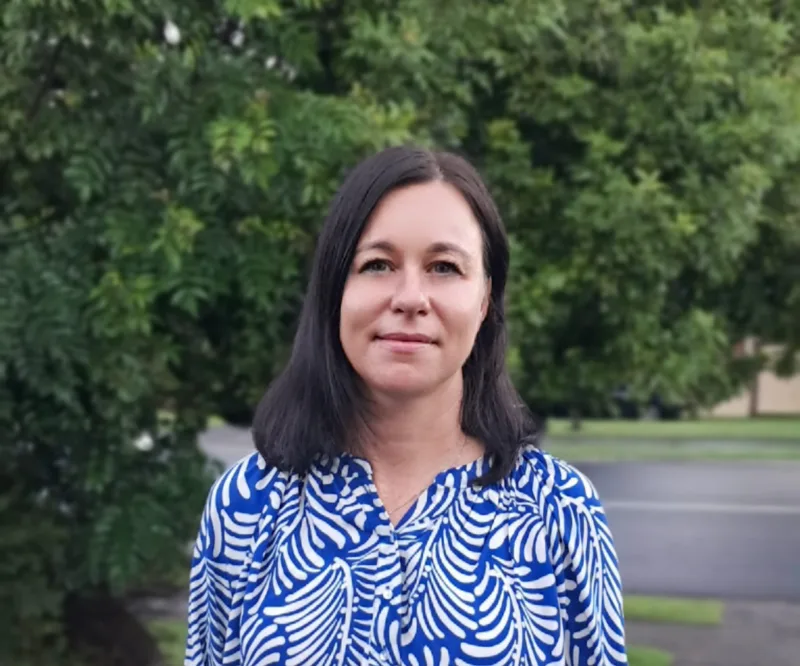
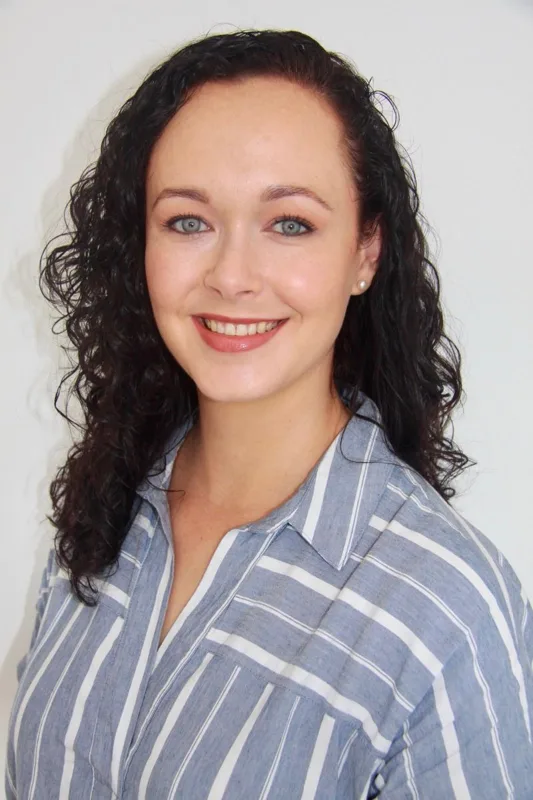
Mindwell's psychologists see adults 18+ anywhere in New Zealand by secure video, with no referral needed. ERP for OCD is delivered by four of our psychologists: Sandy Laurenson, Clinical Psychologist; Candice van der Merwe, Counselling Psychologist; Inge Prince, Clinical Psychologist; and Katherine Lee, Registered Psychologist. Sandy has ERP-specific training through the International OCD Foundation's Behavior Therapy Training Institute, and Katherine also works with parenting and perinatal mental health.
Sessions are 50 minutes, $199 + GST ($228.85 incl. GST), and first appointments are typically available within 7 days. Your first session usually covers what has been happening, your pregnancy or birth, your support at home and what you want to change, and you'll start working out a plan together. Information you share is confidential under the Health Information Privacy Code and shared only with your consent or where the law requires or allows it.
Sources
- Fairbrother N, Collardeau F, Albert AYK, et al. High prevalence and incidence of obsessive-compulsive disorder among women across pregnancy and the postpartum. Journal of Clinical Psychiatry 2021;82(2):20m13398
- Fairbrother N, Woody SR. New mothers' thoughts of harm related to the newborn. Archives of Women's Mental Health 2008;11:221-229
- VanderKruik R, Barreix M, Chou D, et al. The global prevalence of postpartum psychosis: a systematic review. BMC Psychiatry 2017;17:272
- International OCD Foundation: Postpartum and perinatal OCD fact sheet (Abramowitz JS)
- Challacombe FL, Wroe AL. A hidden problem: consequences of the misdiagnosis of perinatal obsessive-compulsive disorder. British Journal of General Practice 2013;63(610):275-276
- NICE guideline CG192: Antenatal and postnatal mental health: clinical management and service guidance
- Healthpoint: Specialist Maternal Mental Health Services (Health NZ, Wellington region example)
- Plunket: Perinatal OCD (parent mental health) and PlunketLine 0800 933 922


Fees
One clear fee for all sessions: $199 + GST ($228.85 incl. GST) per 50-minute session. No referral needed. A Stripe card processing fee (2.9% + 60¢) applies at payment. Many health insurers cover psychology sessions; we provide a receipt you can submit for reimbursement. See full fees and payment details →
Frequently asked questions
Does having these thoughts mean I might hurt my baby?
Intrusive thoughts of harm are reported by almost all new mothers, and people with perinatal OCD find them horrifying precisely because they conflict with everything they want. OCD specialists note the condition is not associated with acting on these thoughts. The distress you feel is a sign of your values, not a warning. A psychologist can assess the full picture with you and explain what the thoughts are and aren't.
How is this different from normal new-parent worry?
All parents worry and most have the occasional alarming image. In perinatal OCD the thoughts are frequent, feel unbearable, and drive rituals: checking, avoiding, seeking reassurance, reviewing. The time and avoidance start shaping your day. If you're bathing your baby only when someone else is home, or awake checking breathing when you could be sleeping, it's worth talking to someone.
Will my psychologist have to report me to anyone?
Having intrusive OCD thoughts about your baby is not, in itself, a child-protection matter, and psychologists who understand OCD know this. Like all health professionals, we share information only with your consent or where the law requires or allows it, and your psychologist will be open with you about that. Fear of being judged keeps many parents from getting help; perinatal OCD is something we assess and treat.
Can I do ERP while breastfeeding or badly sleep-deprived?
Yes. ERP is a psychological treatment, so breastfeeding is no barrier, and sessions can happen while you feed. Sleep deprivation is real and your plan is paced to it: shorter home-practice tasks, realistic steps, and partner support where possible. Decisions about medication while breastfeeding sit with your GP or specialist, not your psychologist.
Should my partner be involved in perinatal OCD treatment?
It's up to you. You're welcome to bring a support person to a session, whether that's your partner, a family or whānau member or a friend. Partners are often the main source of reassurance, so learning how to respond supportively without feeding the OCD can help. Your psychologist will discuss this with you and keep your own sessions confidential. Partners can also develop perinatal OCD themselves and can book in their own right.
What about perinatal OCD in dads and non-birthing partners?
Perinatal OCD affects fathers and partners too, often with the same harm, contamination and checking themes. Because partners are less often asked about their mental health around a birth, it tends to go unrecognised. The same assessment and ERP approach applies, and Mindwell's psychologists see any adult parent in New Zealand.
Ready to take the first step?
Booking takes just a few minutes. Choose a psychologist or take the first available appointment, and have your first session from the comfort of your own home.
Book a session Ask a questionAll sessions are online · Available across New Zealand · Confidential