OCD treatment · Online · Across New Zealand
OCD treatment in New Zealand, online with registered psychologists
OCD is treatable, and the psychological treatment with the strongest evidence, exposure and response prevention (ERP), translates well to video. Several of our NZ-registered psychologists offer ERP online anywhere in Aotearoa New Zealand, for adults 18+, with no referral needed.
Book a session Ask a questionAdults 18+ in New Zealand · Private-pay, not an ACC service · Online only · Not a crisis service
- Pick a time on our secure booking page (Carepatron), and a psychologist if you have a preference.
- Pay by card when you book: $228.85, plus a small card processing fee.
- Get your video link and a short intake form by email. How it works →
By booking, you agree to our Terms of Service, Privacy Policy and Cancellation Policy.
On this page
- What is OCD?
- More than liking things tidy: how OCD shows up
- The obsession-compulsion cycle, and why it gets stronger
- ERP: the first-line psychological treatment for OCD
- What a course of ERP looks like at Mindwell
- Doing ERP online, from your own home
- Who offers ERP for OCD at Mindwell
- When OCD overlaps with anxiety, depression or trauma
- Fees and funding for OCD treatment
- Explore the OCD guide
What is OCD?
Obsessive-compulsive disorder (OCD) is a mental health condition in which unwanted, intrusive thoughts, images or urges (obsessions) cause intense distress, and repeated actions or mental rituals (compulsions) are done to ease that distress or prevent harm. Clinical guidelines recommend cognitive behavioural therapy that includes exposure and response prevention (ERP) as the psychological treatment of choice.
More than liking things tidy: how OCD shows up
OCD is often misunderstood. It isn't a personality quirk or a preference for a clean bench. It's a loop of obsessions (thoughts, images or urges you don't want and can't seem to shake) and compulsions (the things you do, out in the world or inside your head, to make the feeling go away). The relief is real but short-lived, and each round makes the next obsession louder.
OCD can attach to almost anything that matters to you. The themes we see most often:
- Contamination. Fear of germs, chemicals, bodily fluids or illness, with washing, cleaning or avoiding. Someone might scrub their hands until they crack after touching a supermarket trolley, or keep "contaminated" clothes in a bag in the garage. See contamination OCD.
- Harm. Intrusive thoughts or images of hurting someone, often a person you love, with checking, hiding knives or avoiding being alone with them. See harm OCD.
- Checking and responsibility. Driving back to check the garage door, photographing the stove before leaving the house, re-reading an email six times for a mistake that could get you fired.
- Relationships. Constant doubt about whether you really love your partner, or whether they're "right" for you, with testing your feelings and asking friends for reassurance. See relationship OCD.
- Sexual, religious or moral themes. Unwanted sexual thoughts that clash with who you are, fear of having offended God, or endless reviewing of whether you were completely honest. See intrusive thoughts and scrupulosity.
- Mostly mental. Few visible rituals, but hours a day spent analysing, mentally checking and arguing with your own thoughts. Often called "Pure O".
- Order, symmetry and "just right". Needing things lined up, counted or done in a particular way until a feeling of incompleteness finally settles.
- Perinatal. OCD that starts or worsens in pregnancy or after a baby arrives, often with harm or contamination themes about the baby. See perinatal OCD.
These themes overlap, and many people have more than one. The content of the obsession matters less than you might think: the pattern underneath is the same, which is why one treatment approach is used across all of them.
The obsession-compulsion cycle, and why it gets stronger
Here is the loop in slow motion. Something triggers an intrusive thought: you walk past a child at the playground and the thought "what if I touched them?" arrives. The thought feels dangerous and important, so your body responds with a surge of anxiety, disgust or dread. You do something to settle it: mentally replay the walk, check your hands, ask your partner whether you seem like a safe person. The feeling eases, briefly.
That brief ease is the problem. Your brain learns two things: the thought must have been a real threat (why else would you have acted on it?), and the compulsion is what kept you safe. Next time the thought arrives it carries more weight, and the urge to ritualise is stronger. Over months and years the loop can swallow hours of every day.
Why reassurance and avoidance keep OCD going
Reassurance is a compulsion in disguise. Asking "you don't think I'd actually do that, do you?" or googling symptoms at 2am works like checking: it hands your brain a moment of certainty, and the need to ask comes back, often faster each time. Research comparing people with OCD to people without it finds reassurance seeking is markedly more frequent and intense in OCD, including "self-reassurance", telling yourself over and over that it's fine. NICE guidance recommends that treatment help partners and whānau reduce their involvement in reassurance and rituals, because loved ones are so often drawn into the loop.
Avoidance does the same job more quietly. If you stop using the public toilets at the beach, stop holding your niece, or stop driving at night, the anxiety drops, and the message "that situation really is dangerous" is confirmed. ERP targets both of these habits directly.
ERP: the first-line psychological treatment for OCD
Exposure and response prevention (ERP) is a form of cognitive behavioural therapy (CBT) built specifically for OCD. The exposure part means deliberately and gradually approaching the thoughts, objects and situations that set off your obsessions. Response prevention means choosing not to do the compulsion afterwards, and letting the anxiety be there while you find out what actually happens.
It is the psychological treatment recommended by the major clinical guidelines. The UK's NICE guideline (CG31) recommends CBT including ERP for adults with OCD at every level of severity, with more therapist hours as impairment increases. The American Psychiatric Association's practice guideline recommends CBT based on ERP as a first-line treatment, its highest level of clinical confidence. The International OCD Foundation describes ERP as the first-line therapy for OCD in adults, children and adolescents.
The research behind those recommendations is substantial. A meta-analysis of 37 randomised trials that measured outcomes with the Yale-Brown Obsessive Compulsive Scale found very large effects for CBT compared with waiting list and with placebo. ERP is effective for many people. It isn't effective for everyone, and progress depends heavily on actually doing the exposures between sessions.
Medication, usually an SSRI antidepressant, is also recommended in guidelines, on its own or alongside ERP, particularly for moderate to severe OCD. Our psychologists don't prescribe. If you want to discuss medication, talk to your GP or a psychiatrist; we're happy to work alongside them. See medication and therapy for OCD in NZ.
Book a session How booking works →
What a course of ERP looks like at Mindwell
Every course is planned around you, so the details vary, but most include these steps.
- Assessment (often the first session or two). Your psychologist maps your obsessions, compulsions, avoidance and the beliefs that drive them, and asks about mood, anxiety, trauma history and anything else going on. Many use the Yale-Brown Obsessive Compulsive Scale (Y-BOCS), a structured interview that gives a severity score you can track over time.
- Making sense of it. Together you draw out your own version of the cycle, so the logic of treatment is clear before you start. Most people find this step a relief in itself.
- Building a hierarchy. You list the situations and thoughts you avoid or ritualise around, and rate how hard each would be to face without a compulsion. Touching the rubbish bin lid and not washing might be a 3 out of 10; using the shared kitchen at work and then eating lunch might be an 8.
- Exposures with response prevention. You start somewhere manageable and work up, in session and between sessions. Your psychologist coaches you through resisting the ritual and noticing what you learn: often that the anxiety is tolerable, that the feared thing doesn't happen, or that uncertainty is survivable.
- Homework. ERP works through repetition in real life. Regular practice between sessions, often daily, is where most of the change happens.
- Review and relapse planning. Progress is tracked against your starting scores and your own goals, and the last sessions usually focus on becoming your own therapist for when OCD flares.
Sessions are 50 minutes, usually weekly at first and then fortnightly. A typical course is around 12 to 20 sessions. For OCD causing moderate impairment, NICE recommends more than 10 therapist hours, which at 50 minutes a session means at least 13 sessions. Some people need fewer, some more, and you and your psychologist review the plan as you go. You pay per session, so you can pause or stop at any point.
Doing ERP online, from your own home
Video sessions suit ERP unusually well. In a clinic, you practise touching a door handle the therapist has chosen and then go home to the door handle you actually fear. Online, the exposure happens where OCD lives: your kitchen, your bathroom, your car, your baby's room. Your psychologist can watch you touch the thing, coach you through the urge, and see what you do next.
That matters for how learning sticks. Exposure researchers describe fear learning as tied to the context it happens in, and recommend practising across the settings where the fear shows up so the new learning generalises. Doing exposures at home from day one removes the gap between "the therapy room" and "real life".
The evidence for remote delivery is good. A meta-analysis of 18 studies found remote CBT for OCD produced large symptom reductions, with outcomes "not meaningfully different" from face-to-face treatment in the trials that compared them directly. Our sessions run through Carepatron, which works in your browser with no download. You'll need a private space, a stable connection, and a willingness to let your psychologist see the parts of your home OCD has taken over. Read more about how online therapy works and whether online therapy is effective.
Who offers ERP for OCD at Mindwell
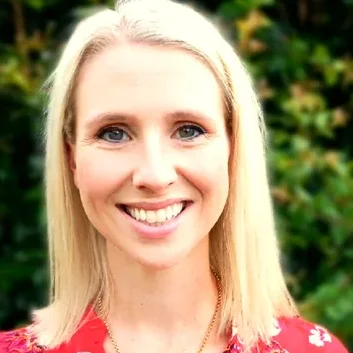
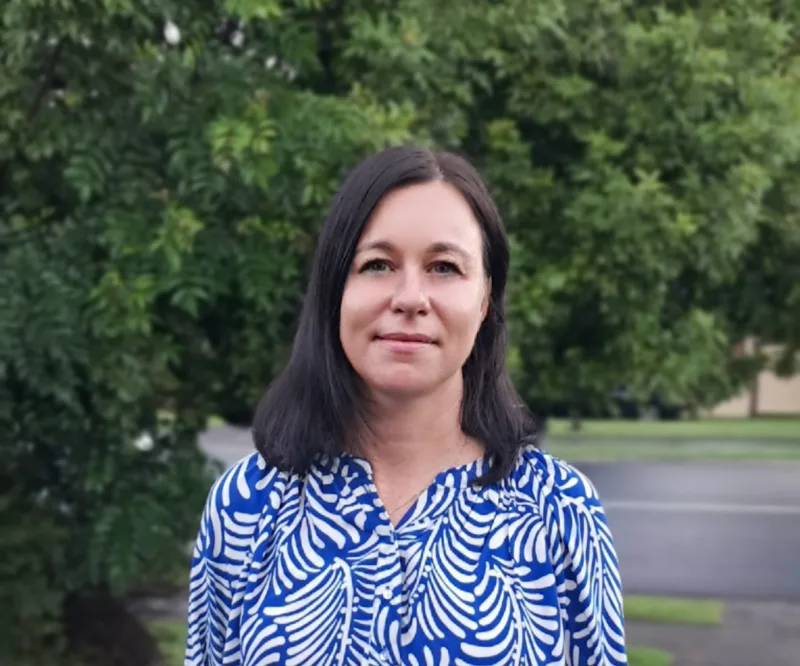
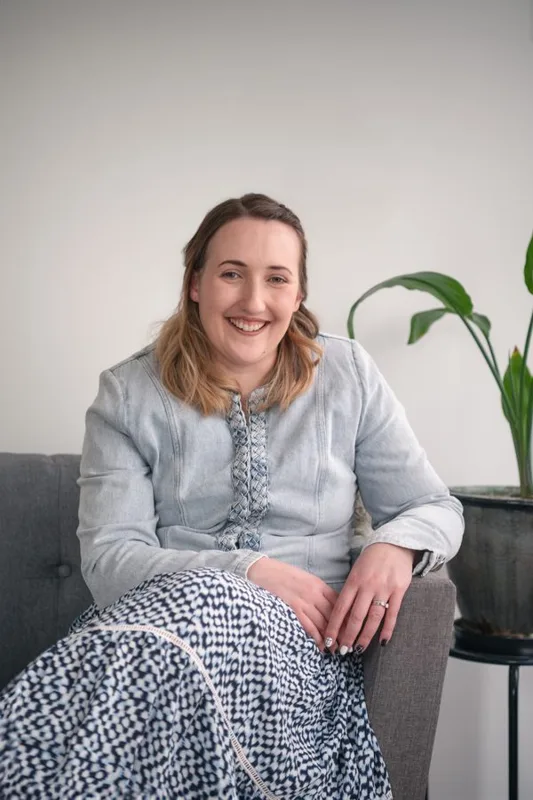
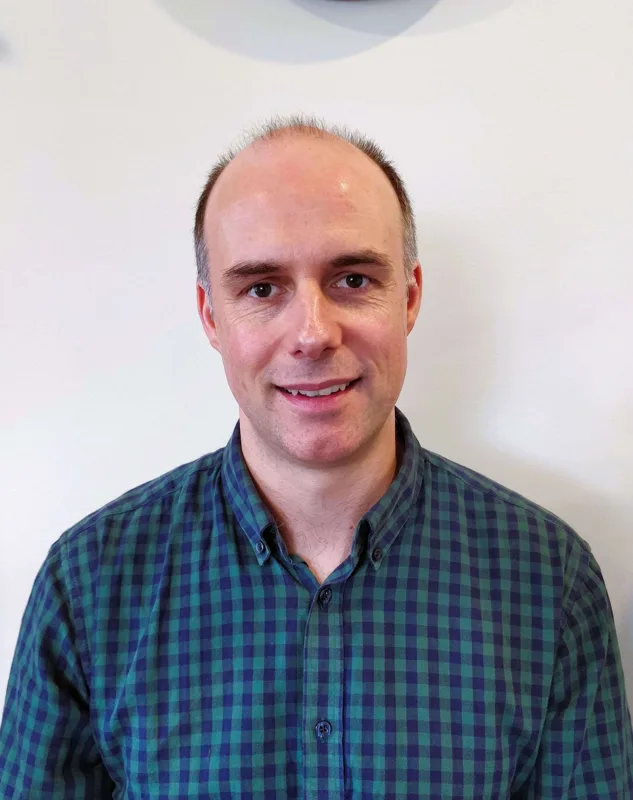
At Mindwell, ERP for OCD is delivered by five psychologists: Sandy Laurenson, Clinical Psychologist; Candice van der Merwe, Counselling Psychologist; Inge Prince, Clinical Psychologist; Katherine Lee, Registered Psychologist; and Jeremy Mason, Clinical Psychologist. Sandy completed the International OCD Foundation's Behavior Therapy Training Institute (BTTI) in June 2025.
All Mindwell psychologists are registered with the New Zealand Psychologists Board. You can choose who you see when you book, or be matched with the first available psychologist. If you're booking for OCD and would like ERP, choose one of the five psychologists above. For help deciding, see how to find an ERP therapist in NZ and our team.
When OCD overlaps with anxiety, depression or trauma
OCD rarely travels alone. In the US National Comorbidity Survey Replication, most adults who had ever had OCD also met criteria for another condition at some point, most often an anxiety disorder or a mood disorder. In practice that looks like someone whose OCD flares when work stress peaks, who has become flat and hopeless after years of rituals, or whose intrusive images connect to something that happened to them.
This changes the plan, not the diagnosis. Your psychologist will assess what else is going on and sequence treatment sensibly: sometimes ERP first, sometimes work on low mood or trauma alongside it or beforehand. Some of our psychologists are trained in EMDR for trauma, and the team also uses ACT and DBT skills where managing emotion is part of the picture.
Two common questions: OCD or anxiety? See OCD vs anxiety. Health worries that look like OCD? See health anxiety. If you're not sure what you're dealing with, an OCD assessment is the place to start, and our psychologists will tell you honestly if they think something else fits better.
Fees and funding for OCD treatment
Sessions are $199 + GST ($228.85 incl. GST) for 50 minutes, paid at booking, with 48 hours' notice to cancel or reschedule. We're not an ACC provider, so sessions are self-funded, but we provide receipts for health-insurance claims, and many NZ insurers include an annual psychologist allowance; check your policy. Mindwell works with adults 18+ in New Zealand.
If private therapy isn't affordable right now, there are other routes. Just a Thought offers a free, six-part online CBT course for OCD. Your GP can refer you to Health NZ community mental health services and tell you what free mental health support is available through your practice. The full picture, including health insurance and other funding routes, is in our guide to the cost of OCD treatment and funding in NZ. See also fees and health insurance for psychologist sessions.
Explore the OCD guide
Each page below goes deeper into one presentation of OCD or one practical question, written for New Zealand.
- ERP therapy for OCD: what exposure and response prevention is, step by step, and how progress is measured.
- Intrusive thoughts: why everyone has them, why they stick in OCD, and what helps.
- Pure O: OCD where the compulsions are mostly mental, and how ERP treats rituals you can't see.
- Harm OCD: fear of hurting yourself or others, why it isn't a sign of danger, and treatment.
- Relationship OCD: doubts about your partner or the relationship that won't settle, and how to tell them from ordinary doubts.
- Contamination OCD: washing, cleaning and avoidance, including mental contamination, and how ERP is paced.
- Scrupulosity: religious and moral OCD, from blasphemous thoughts to endless confession.
- Perinatal OCD: OCD in pregnancy and after birth, including intrusive thoughts about your baby.
- OCD assessment: what a psychologist asks, how severity is measured, and what happens next.
- Medication and therapy for OCD in NZ: how SSRIs and ERP fit together, and who to talk to.
- Finding an ERP therapist in NZ: questions to ask and what to look for.
- Cost and funding for OCD treatment in NZ: fees, insurance, public options and free resources.
- OCD vs anxiety: how they differ, how they overlap, and why it matters for treatment.
Sources
- NICE guideline CG31: Obsessive-compulsive disorder and body dysmorphic disorder: treatment
- American Psychiatric Association. Practice guideline for the treatment of patients with obsessive-compulsive disorder (Koran et al., 2007)
- International OCD Foundation: Exposure and Response Prevention (ERP)
- International OCD Foundation: What is OCD?
- Öst LG, Havnen A, Hansen B, Kvale G. Cognitive behavioral treatments of obsessive-compulsive disorder: a systematic review and meta-analysis of studies published 1993-2014. Clinical Psychology Review 2015;40:156-169
- Wootton BM. Remote cognitive-behavior therapy for obsessive-compulsive symptoms: a meta-analysis. Clinical Psychology Review 2016;43:103-113
- Ruscio AM, Stein DJ, Chiu WT, Kessler RC. The epidemiology of obsessive-compulsive disorder in the National Comorbidity Survey Replication. Molecular Psychiatry 2010;15:53-63
- Healthify He Puna Waiora: Obsessive compulsive disorder
- Kobori O, Salkovskis PM (2013). Patterns of reassurance seeking and reassurance-related behaviours in OCD and anxiety disorders. Behavioural and Cognitive Psychotherapy, 41(1), 1-23
- Craske MG, Treanor M, Conway CC, Zbozinek T, Vervliet B (2014). Maximizing exposure therapy: an inhibitory learning approach. Behaviour Research and Therapy, 58, 10-23
Updated October 2026 · How we write our information

Fees
One clear fee for all sessions: $199 + GST ($228.85 incl. GST) per 50-minute session. No referral needed. A Stripe card processing fee (2.9% + 60¢) applies at payment. Many health insurers cover psychology sessions; we provide a receipt you can submit for reimbursement. See full fees and payment details →
Frequently asked questions
Do I need an OCD diagnosis before I book?
No. You don't need a diagnosis or a GP referral to book. Your psychologist will start by assessing what's going on, including whether OCD is the right description or whether something else fits better. These pages are information, not diagnosis, and an assessment is how you find out what you're actually dealing with.
Will my psychologist push me into exposures I'm not ready for?
No. ERP is collaborative, and you agree every step before you take it. You build the hierarchy together, you choose where to start, and nothing is sprung on you in session. It is meant to be challenging, and your psychologist will encourage you to lean in, but the pace is set with you, not for you.
Can I do ERP if I'm already taking medication for OCD?
Yes. Many people do ERP while taking an SSRI, and many ERP trials have included people on a stable dose of medication. Keep taking medication as prescribed, and talk to your GP or psychiatrist before making any change. Your psychologist can share progress with your prescriber if you'd like them to, with your consent.
How do I know whether my OCD is "bad enough" to need treatment?
There's no score to pass. A psychologist would explore how much time the obsessions and compulsions take each day, how distressing they are, and what they're stopping you from doing: work, parenting, relationships, sleep. If OCD is costing you an hour or more a day, or you're organising your life around it, that is reason enough to get help.
Does Mindwell treat children or teenagers with OCD?
No. Mindwell works with adults aged 18 and over. For a child or teenager, start with your GP, who can refer to Health NZ child and adolescent mental health services. Gumboot Friday (through I Am Hope) offers free counselling for people aged 25 and under, and school guidance counsellors are another first step.
Is OCD treatment covered by ACC or health insurance in New Zealand?
Mindwell is not an ACC provider, so sessions are self-funded. Many NZ health insurers include an annual allowance for psychologist sessions, often with conditions such as a GP referral, so check your policy. We provide receipts for every session that you can submit to your insurer. Our funding guide covers other options.
Can you live a full life with OCD?
Yes. OCD is a treatable condition, not a life sentence. With ERP, many people win back much of the time and freedom that rituals and avoidance had taken, and learn skills that let them catch future flare-ups early. Some symptoms may come and go, particularly under stress, and that is expected rather than a failure; a short return to the strategies usually settles things. People with OCD work, study, parent and have relationships like anyone else.
Ready to take the first step?
Booking takes just a few minutes. Choose a psychologist or take the first available appointment, and have your first session from the comfort of your own home.
Book a session Ask a questionAll sessions are online · Available across New Zealand · Confidential